
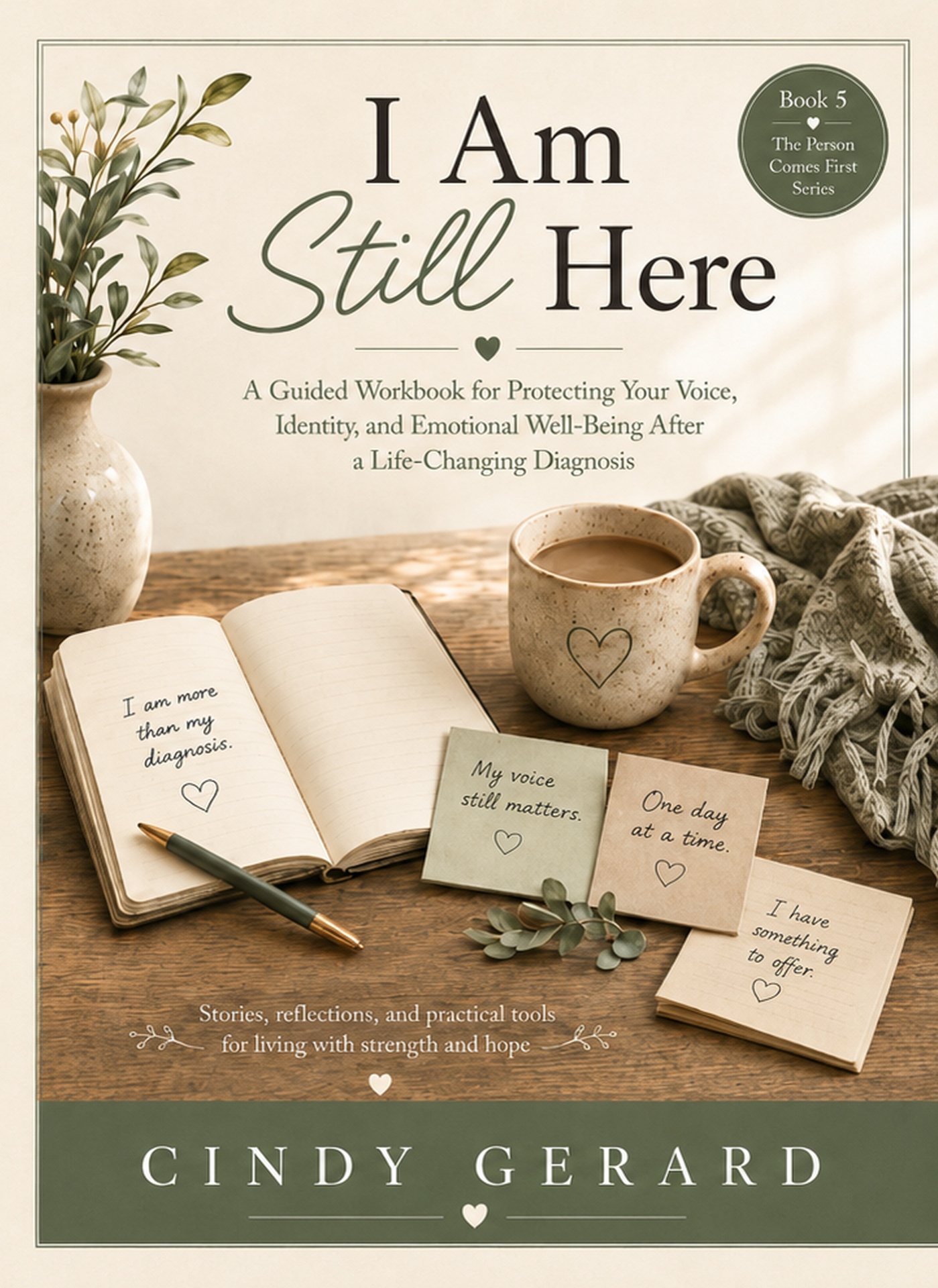
I Am Still Here
For the person living with the diagnosis — written to them, not about them.
By Cindy Gerard
The moment this book is for
"I have the diagnosis."
Helping individuals preserve their voice, identity, and independence.
Most books about a life-changing diagnosis are written for everyone except the person who received it. This one is different.
I Am Still Here speaks directly to the person living with the diagnosis: you are not a patient first. You are still the person who raised a family, built a career, told the best stories at the table, and knows exactly how you like your coffee.
It is a guide to holding on to independence for as long as possible, saying what matters while it is easy to say, and leaving the people you love a record of who you are — in your own words and your own voice.
What you'll learn
- How to tell people what you need without losing your independence
- Ways to preserve your voice, stories, and preferences now
- Making decisions about care while the decisions are still yours
- Talking to family honestly about the future
- Building comfort routines that will carry forward
Key takeaways
- A diagnosis explains something about you. It does not replace you.
- The best time to say what matters is while it's easy.
- Your preferences are care instructions, not requests.
- You get to decide who knows what, and when.
What readers say
"This series offers the kind of guidance families need when facing a life-changing diagnosis. Compassionate without being overly sentimental, practical without ever losing sight of the person at the center of the experience."
— Reader review — Practical, compassionate, and deeply needed
"What I appreciated most is its focus on seeing the individual rather than only the diagnosis. The books are easy to understand, encouraging, and filled with useful suggestions families can put into practice."
— Reader review — A meaningful resource for the whole family
"These books address difficult situations in a gentle, reassuring way. The message throughout is clear and important: a diagnosis may change someone's needs, but it does not change who they are."
— Reader review — Helpful without feeling overwhelming
Read next
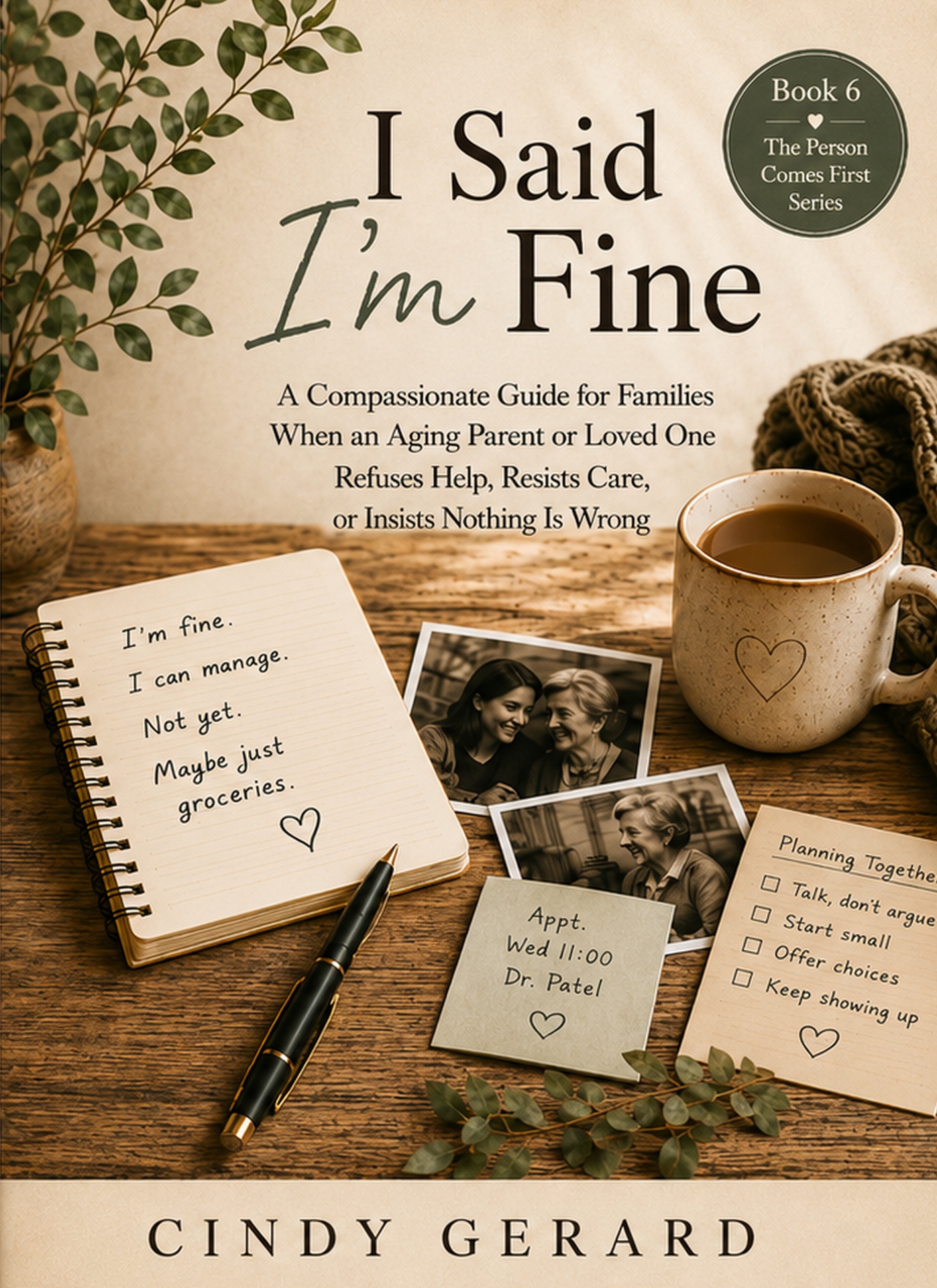
I Said I'm Fine
For families meeting resistance from someone who insists nothing is wrong.
Continue the series