
Part of the Caregiving & Family collection
The Person Comes First
6 books by Cindy Gerard
Every family faces different challenges after a life-changing diagnosis.
Whether you're noticing the first signs, trying to understand confusing behaviors, navigating family disagreements, or learning to live with a diagnosis, each book in this series offers compassionate guidance for a specific moment in the journey.
Because every diagnosis changes life—but it should never define the person.
Where are you on the journey?
Every family arrives at this in a different place. Start with the sentence that sounds most like yours.
Book 1
"I've noticed something has changed."
Sometimes the first sign isn't a diagnosis. It's a feeling that something is different.
It Was Funny… Until It Wasn'tBook 2
"Something doesn't seem right."
When small changes begin forming a pattern and you're unsure what to do next.
Something Isn't RightBook 3
"Our family can't agree."
Helping siblings and loved ones communicate, share responsibility, and make decisions together.
We All Love Them—So Why Can't We Agree?Book 4
"I don't understand the behavior."
Looking beyond behaviors to understand what someone may really be trying to communicate.
The Story Behind the BehaviorBook 5
"I have the diagnosis."
Helping individuals preserve their voice, identity, and independence.
I Am Still HereBook 6
"They keep saying "I'm fine.""
Helping families navigate resistance while preserving dignity and relationships.
I Said I'm Fine
Meet the series
Six practical guides. Six real-life challenges. One compassionate philosophy. Each book addresses a specific challenge families commonly face after a life-changing diagnosis.

Book 1
It Was Funny… Until It Wasn't
For the moment you realize the stories you used to laugh about have started to worry you.

Book 2
Something Isn't Right
For the point where small changes have become a pattern and you need to know what to do next.

Book 3
We All Love Them—So Why Can't We Agree?
For families where everyone wants what's best and no two people define it the same way.
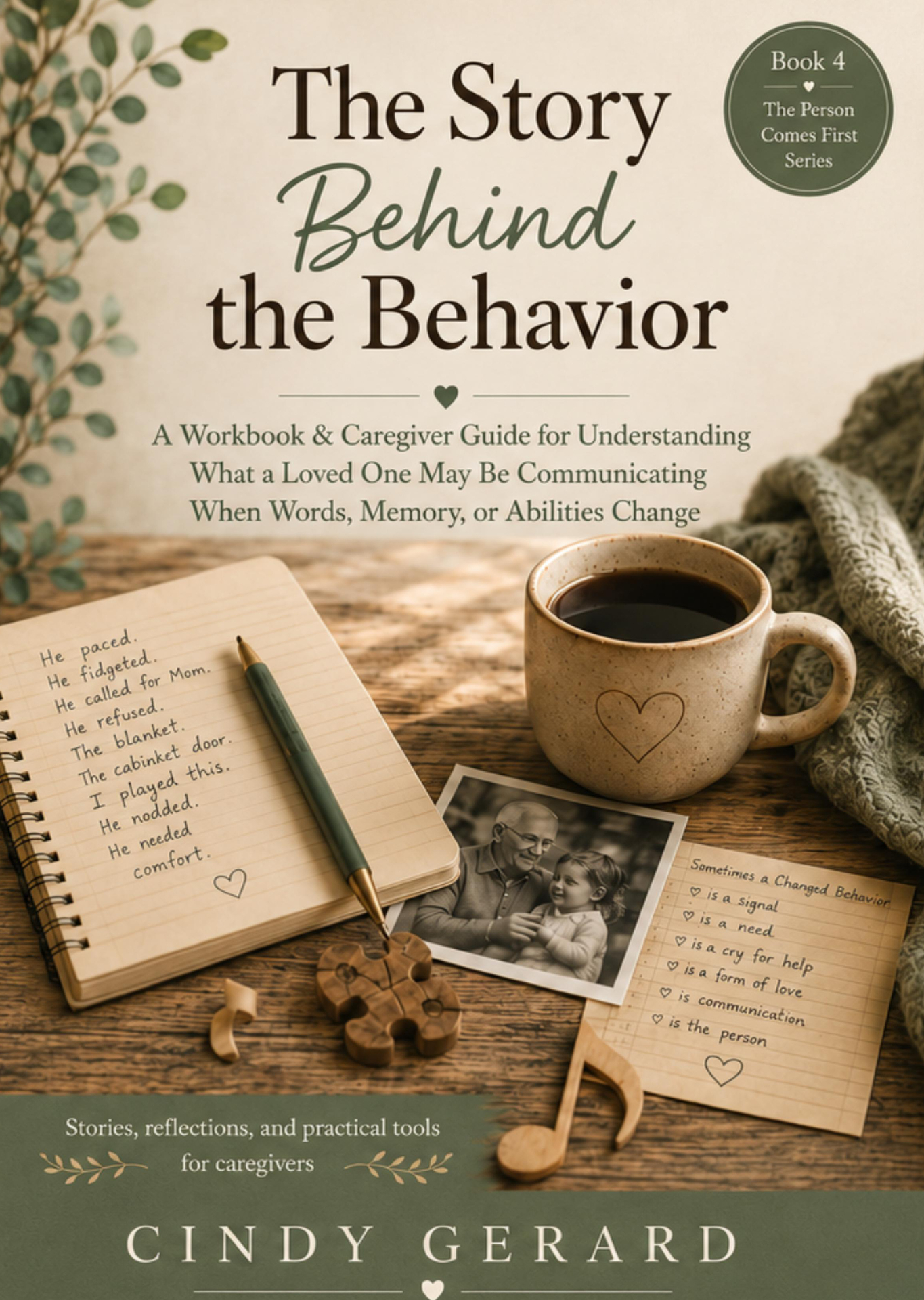
Book 4
The Story Behind the Behavior
For the days when behavior stops making sense and you need a way to understand it.

Why this series is different
Most caregiving books explain the condition. This series explains the person living with it.
Identity before symptoms
Most caregiving books start with the medical picture. This series starts with the person — their history, humor, preferences, and the things that make them unmistakably themselves.
Relationships you can keep
Care is easier when the relationship survives it. Every book protects the connection between the person and the people who love them.
Communication that actually works
Practical language for hard conversations: with doctors, with siblings, and with the person who insists nothing is wrong.
Written for real families
No jargon, no clinical distance. Clear chapters written for people reading at the end of a long day.
Practical guidance for every stage
From the first quiet concerns to understanding changing behaviors, navigating difficult family conversations, preserving independence, and responding with compassion, every book provides practical tools families can begin using immediately.
Every journey begins somewhere
Every family's experience is different.
Some readers begin by noticing subtle changes.
Others are trying to understand behaviors that no longer make sense.
Some are working through disagreements with siblings or learning how to support someone who refuses help.
Others are living with the diagnosis themselves.
There is no right place to begin.
Each book stands on its own while sharing one compassionate philosophy: know the person, not the diagnosis.
Know the person. Not the diagnosis.
Questions readers ask
Where to begin, who the books are for, and what to do when the person you love says nothing is wrong.
- Which book should I start with?
- Start with the book whose situation sounds most like yours right now — the series is designed to be read in any order. If the changes are new and you are still telling yourself the stories are funny, begin with It Was Funny... Until It Wasn't. If small changes have become a pattern, begin with Something Isn't Right. If the hardest part is disagreement inside the family, begin with We All Love Them—So Why Can't We Agree?
- Do I have to read the six books in order?
- No. Each book stands on its own and addresses one specific challenge families face after a life-changing diagnosis. Many readers buy one book for the situation in front of them and come back to the others as circumstances change.
- Who is The Person Comes First series written for?
- Family caregivers, adult children, spouses, siblings, and friends supporting someone living with dementia or another life-changing diagnosis. The books use plain language rather than clinical language, so no medical background is needed. Care professionals also use them with the families they serve.
- Is the series only about dementia?
- The examples most often come from dementia care, because that is where families ask for help most. The approach — understanding behavior as communication and keeping the person, not the diagnosis, at the center — applies to many progressive and life-changing conditions.
- Which book helps when siblings disagree about care?
- We All Love Them—So Why Can't We Agree? is written for families where everyone wants what is best and no two people define it the same way. It covers why care conflict happens, how to talk about it, and how to make decisions together without one person carrying everything.
- Is there a book written for the person with the diagnosis?
- Yes. I Am Still Here is written to the person living with the diagnosis rather than about them, so it can be read together or given directly to them.
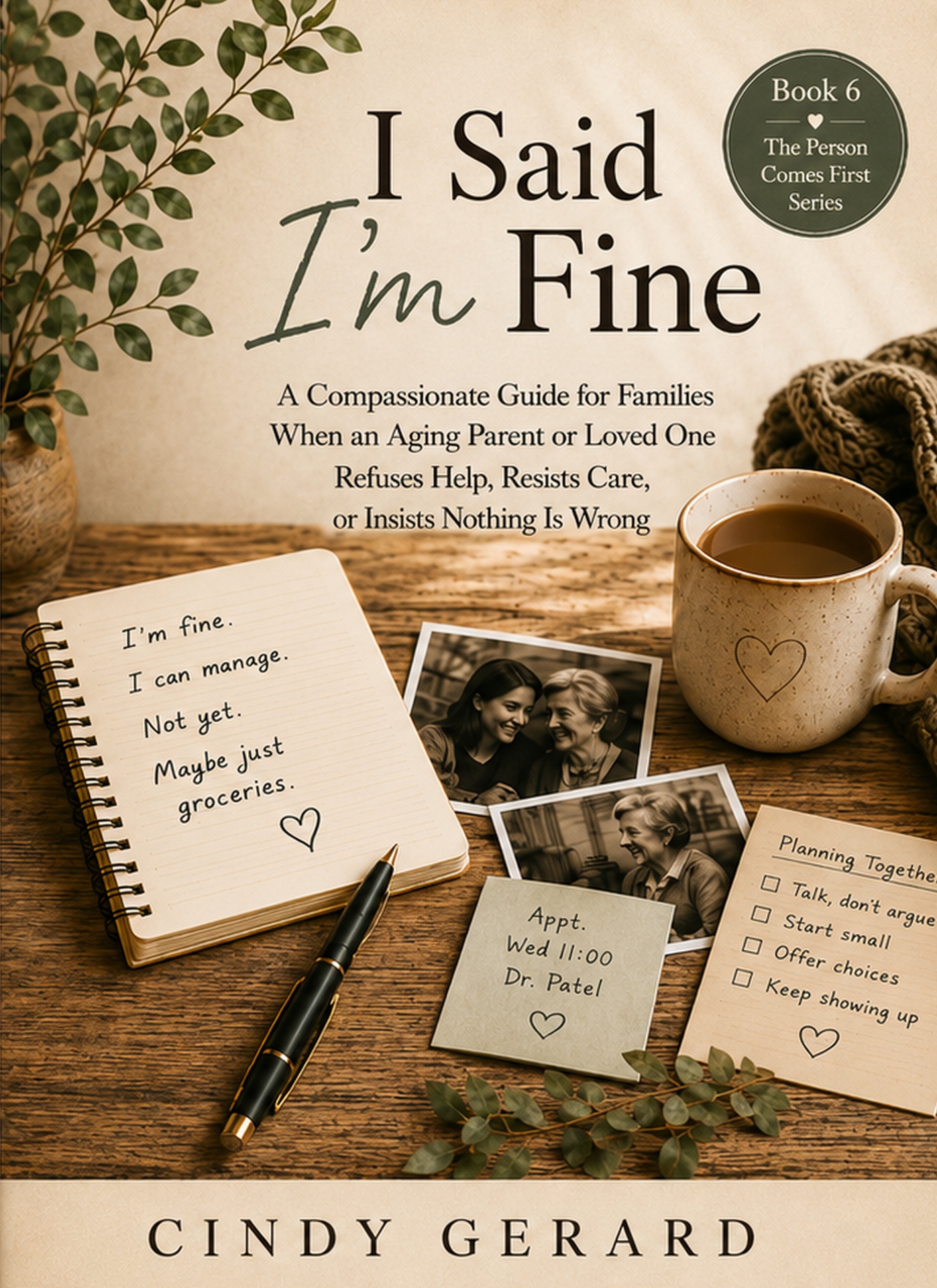
- What if the person insists nothing is wrong?
- I Said I'm Fine is written for exactly that. It addresses resistance, denial, and refusal of help, and offers language for staying connected while still keeping the person safe.
- In what formats are the books available?
- Every book in the series is available in paperback and ebook on Amazon, where you can also use Look Inside to read a sample before you buy.
Meet the founder
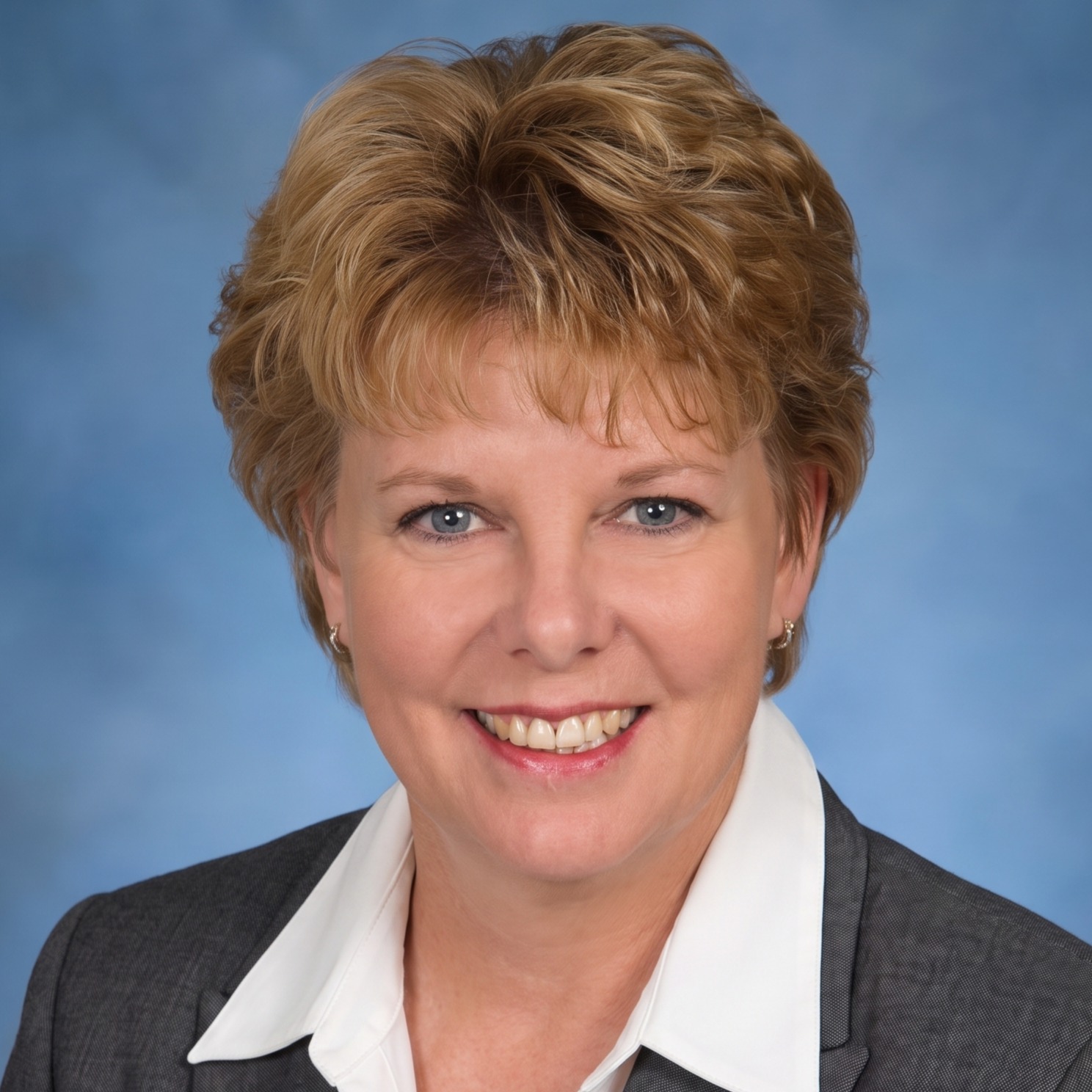
Cindy Gerard
Every person and every story matters.
Cindy Gerard is the founder, creator, and publisher behind ForeverStori Publishing. A teacher and family caregiver, she develops thoughtful books designed to help people feel seen, understood, and valued.
Her work includes compassionate resources for families navigating life-changing diagnoses, person-centered books that encourage understanding and connection, and imaginative children's stories such as Finny: A Fish in the Forest, which celebrates curiosity, courage, individuality, and belonging.
Whether you're noticing the first signs, trying to understand changing behaviors, supporting someone who has received a diagnosis, or simply trying to keep your family connected — you don't have to figure it out alone.
The Person Comes First series was created to help families move forward with greater understanding, confidence, and compassion.
The person always comes first.