
Preserving Dignity in the Small Moments of Daily Care
Dignity isn't a policy. It's how you knock, how you ask, how you talk about someone while they're in the room.
By Cindy Gerard
Families rarely lose someone's dignity in a single decision. It leaks out of a hundred small moments — a door left open, a conversation held over their head, a choice made because it was faster.
Five habits that protect it
- Knock, and wait, even in your own house
- Offer two options instead of asking an open question
- Speak to them, never about them, when they're in the room
- Let them do the slow version of anything they can still do
- Use their name and their history — not "sweetie," not "the patient"
Their preferences are care instructions, not requests.
Write the preferences down while they can tell you: how they take their coffee, which side they sleep on, what music settles them, who they always want called. That page becomes the most useful document in the house.
Keep reading
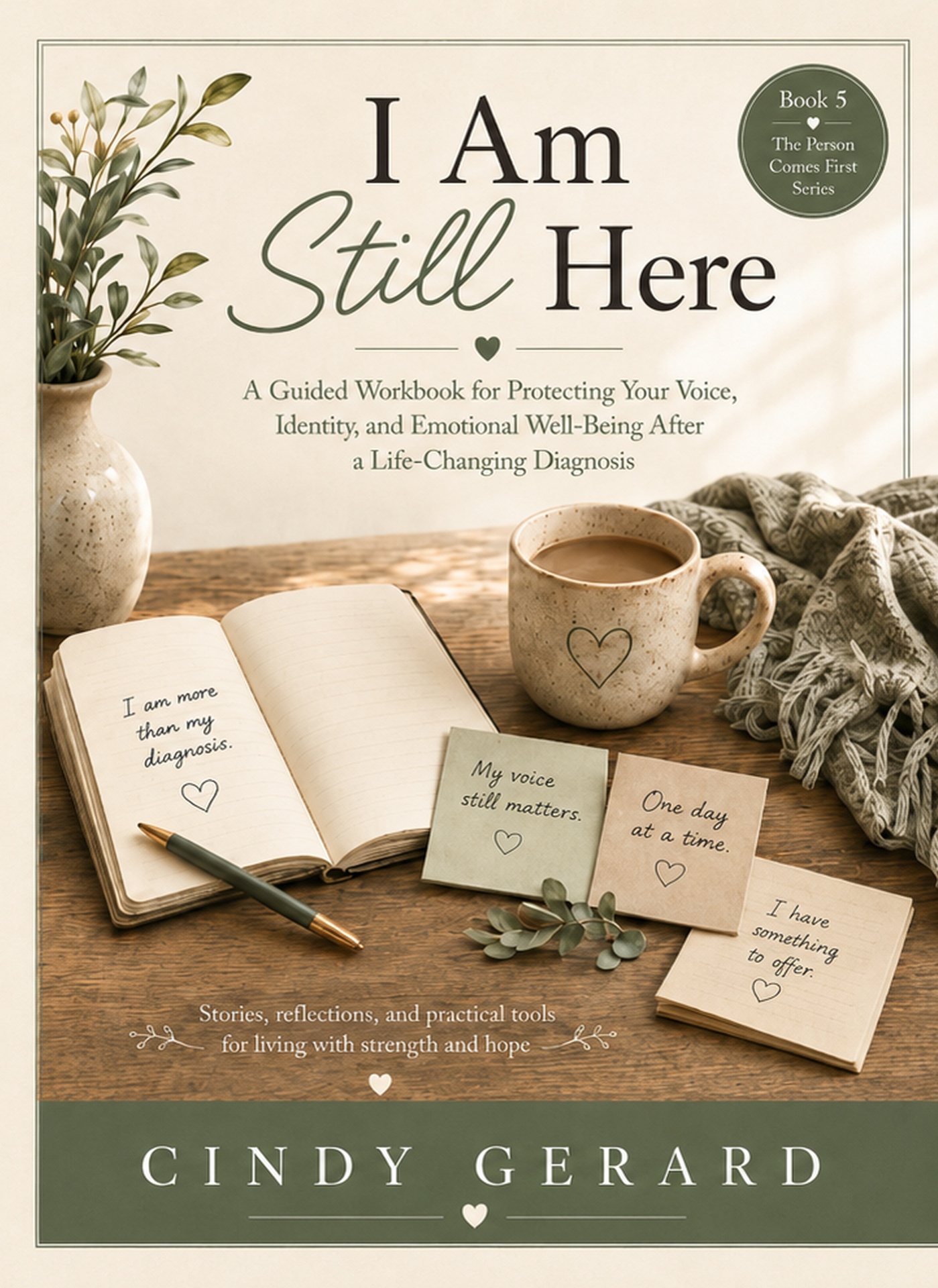
I Am Still Here
For the person living with the diagnosis — written to them, not about them.
About this bookNewsletter
Get the next entry by email
A short note when we publish a new journal entry or release a new book. Nothing else.